



When was the last time you went an entire day without checking your phone? For most of us, it’s hard to remember. New York-based artist Yanbin Song knows just how difficult it can be. After quitting social media in 2023, she began spending occasional weekends completely unplugged. During one of these breaks, she found herself unable to look up an unfamiliar word and eventually gave in, asking her smart speaker for help.
Her sculpture In Case of Digitalism (2026) takes the idea of disconnecting to an extreme. A smartphone case fitted with an emergency hammer, it offers a way out of digital life, but only if you’re willing to destroy your phone. The work has appeared in several exhibitions. As Song points out, even someone who bought such a case would probably never use the hammer.
Song has been exploring our uneasy relationship with technology for years. In Selfie – Mixed Reality?, she turned a digitally distorted selfie into a physical sculpture, questioning what happens to our sense of self when we move between screens and the real world. We spoke with her about the ideas behind her work, life beyond social media, and why finding a balance with technology is easier said than done.
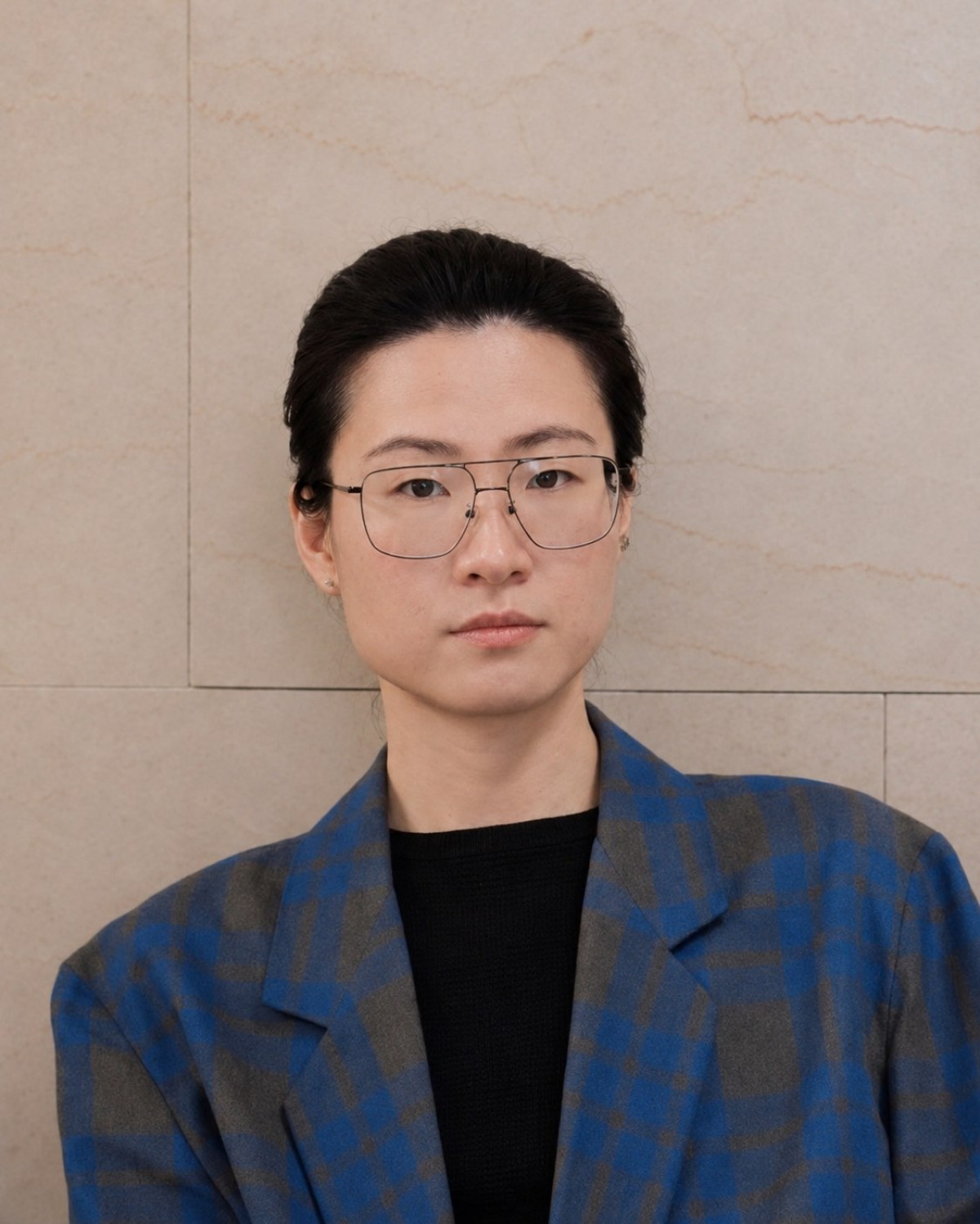
How did your journey as an artist begin?
Like a lot of people, I wanted to be an artist since I was a kid but never formally pursued it, so I was pretty much what The Artist’s Way calls a shadow artist. I went into urban planning because I wanted to design environments that make people feel happy, and because anything close to design made me happy. The deeper I got, the more I realized the part that excited me most was still the design.
So I decided to pursue Design and Technology at Parsons. Compared to an urban master plan that takes years to take shape, digital forms offer much faster feedback. The diverse digital possibilities opened up a whole new world of multimedia art for me, and finally let my creativity out.
Which parts of everyday digital life most often become material for your work?
I keep thinking about digital devices, like smartphones. Every day on the subway, almost everyone, including myself, is holding a phone. It’s almost like we’ve all entered the digital world. We spend so long every day facing a screen. Does that mean we’re not really living in the analog world anymore? Where do we stand with these devices? What does digital life even mean? Those are the questions my work explores.
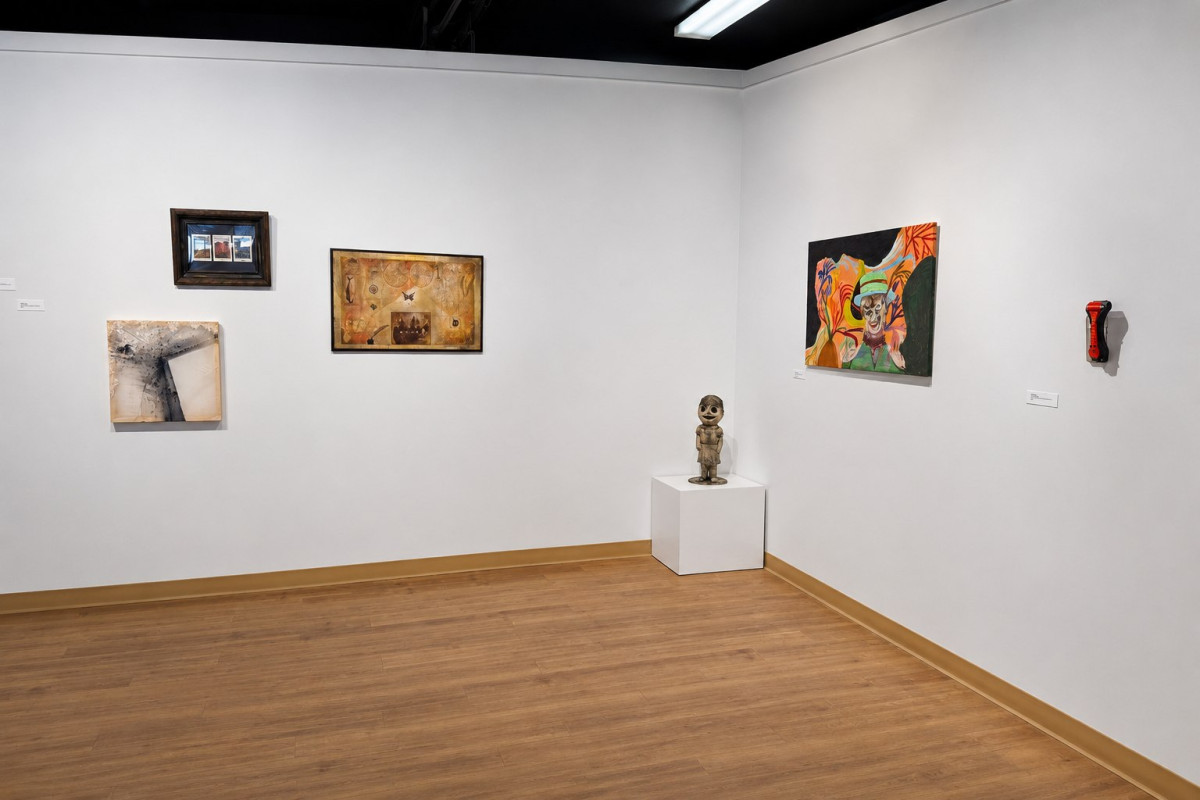
Cursed Objects, SCENE Metrospace, Michigan State University, 2026, installation view. Photo courtesy of Laurén Gerig, Director of Galleries and Outreach, Michigan State University.
How have the different cultural settings in which you have studied and worked shaped your artistic perspective?
Studying urban planning in London shaped a big part of how I think, especially about diversity, justice, and sustainability in cities, and those were the first themes of my experiments in media art.
New York brought a high intensity of ideas and diversity. I had chances to put my work in front of the public and get feedback. I made an interactive piece called Opinions that turns hand gestures into sound, and took it to Maker Faire and Games for Change. One visitor told me the sound didn’t represent his hand, that his hand wasn’t that kind of instrument. In interactive art, the audience takes part, so there has to be user experience design in it. The boundary between art and design gets blurred, and that’s what’s interesting to me.
Underneath all of that, Eastern philosophy shapes the way I think. I practice mindfulness, and the Tao Te Ching has been a huge inspiration.
Much of your work explores the relationship between the digital and physical worlds. What keeps drawing you back to this subject?
We’re getting closer and closer to technology. Now it feels like a lot of things just can’t get done without a phone. Are we already cyborgs?
So I’ve been trying to find a balance with technology. Sometimes I do a mini Vipassana practice—a weekend with no devices and no talking to anyone, completely unplugged. A day, even an hour, feels so long, and I don’t know how to get through it. So I do chores, tidy things up. Suddenly it hits me. Washing dishes, vacuuming the floor—the “chores” we never prioritize in modern life are actually what life is.
These days, it’s almost impossible to fully cut off, though. The first time, I was reading and came across a word I didn’t know, and couldn’t look it up on my phone. Then I broke the rule and asked the smart speaker. After two days, hearing a voice again felt amazing. I thought, whoever invented audio and radio was a genius. It made me very grateful for technology.
This love-hate relationship with technology is probably what keeps drawing me back.
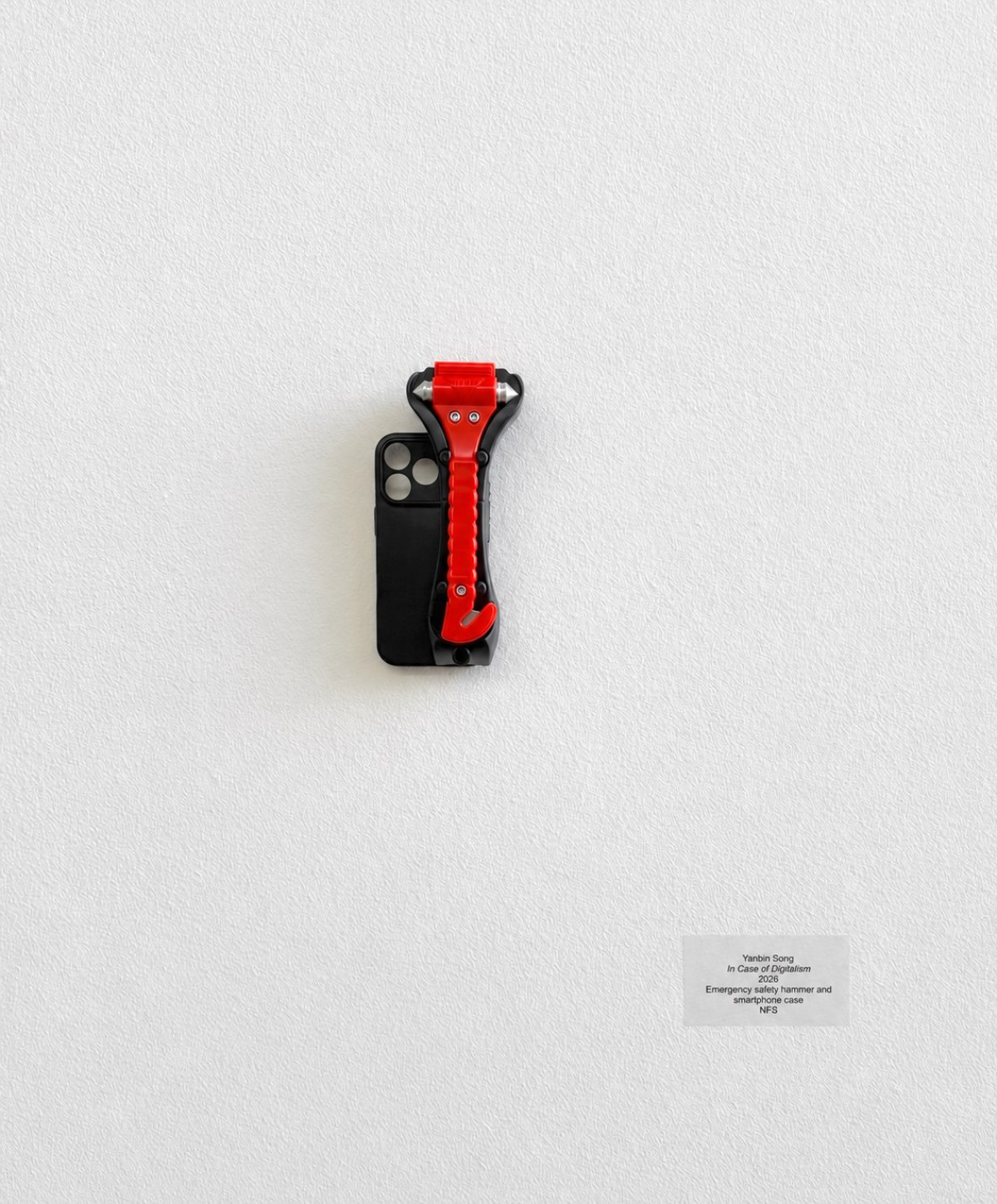
In Case of Digitalism (2026), emergency safety hammer and smartphone case. Installation view, Contemporary Figure: A National Juried Exhibition, Louise Hopkins Underwood Center for the Arts, Lubbock, Texas, October 2 to November 28, 2026. Photo courtesy of Taylor Ernst, Curator, LHUCA.
Your piece In Case of Digitalism combines a phone case with an emergency hammer. How did you come up with this idea?
I kept thinking, how can we just live in the analog world the whole time? The phone is almost like a portal to the digital world, so what if I take it to the extreme and destroy the portal? An emergency hammer came to mind. It usually sits right next to the thing it’s meant to break, so you can escape safely. So I attached one really close to the phone, on the case. It’s very interesting that their size and shape happen to fit. The hammer’s curve almost feels purposeful, leaving room for the camera holes.
In Case of Digitalism has been selected for several juried exhibitions this year. Have you been surprised by how people respond to it?
It’s an absurd work and it speaks for an era, so I think it’s pretty easy to relate to. It catches viewers’ attention right away, and they get the meaning pretty quickly. A friend told me if this were a real product, they would definitely buy it. I’m pretty sure even if they bought it, they wouldn’t use the hammer for its intended purpose. That’s what’s interesting. Who would want to break their phone, even if we’re all addicted to it?
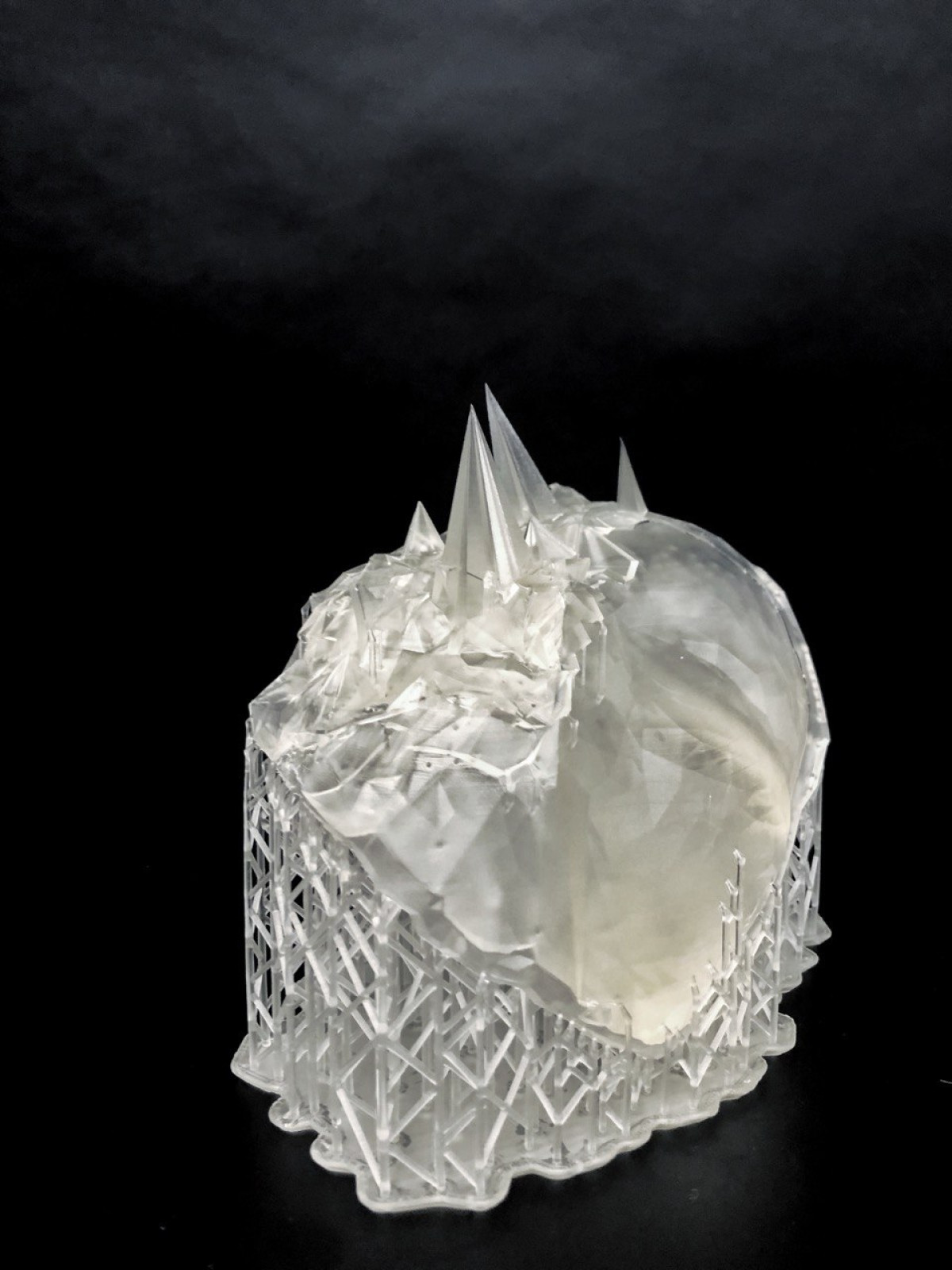
Glitch sculpture of the selfie (2019), 3D-printed glitched self-portrait.
Your earlier work Selfie – Mixed Reality? turns a digitally distorted selfie into a physical sculpture. What made you want to bring a digital image into the real world?
With all the dark patterns built into digital apps, a lot of the time you just can’t stop. It’s like being sucked into the digital world. I wondered if I could capture that motion. A selfie is a special moment where I’m coexisting in the digital and analog worlds. The glitch is a visualization of the selfie being pulled toward the phone screen. I wanted to visualize that threshold, so I 3D-printed the glitched model. When we exist in both worlds at the same time, are we still whole? Has our state already changed?
Do you think social media has changed the way we see ourselves? Has it changed the way you make art?
I used to be someone who posted an Instagram Story every day and scrolled for hours. But in 2023, I banned myself from social media. I realized then how much social media had changed how I see myself—it made me see my true self less and less, and it made me more restless.
Going back to what I learned from those unplugged weekends without the mindless scrolling, the truth of life appears in every moment. The air outside the window, how your body feels right now. None of that has anything to do with social media or tech. Modern life keeps pulling us outward. Once I actually look inward, the ideas at the source get clearer, and my thinking about art feels purer.
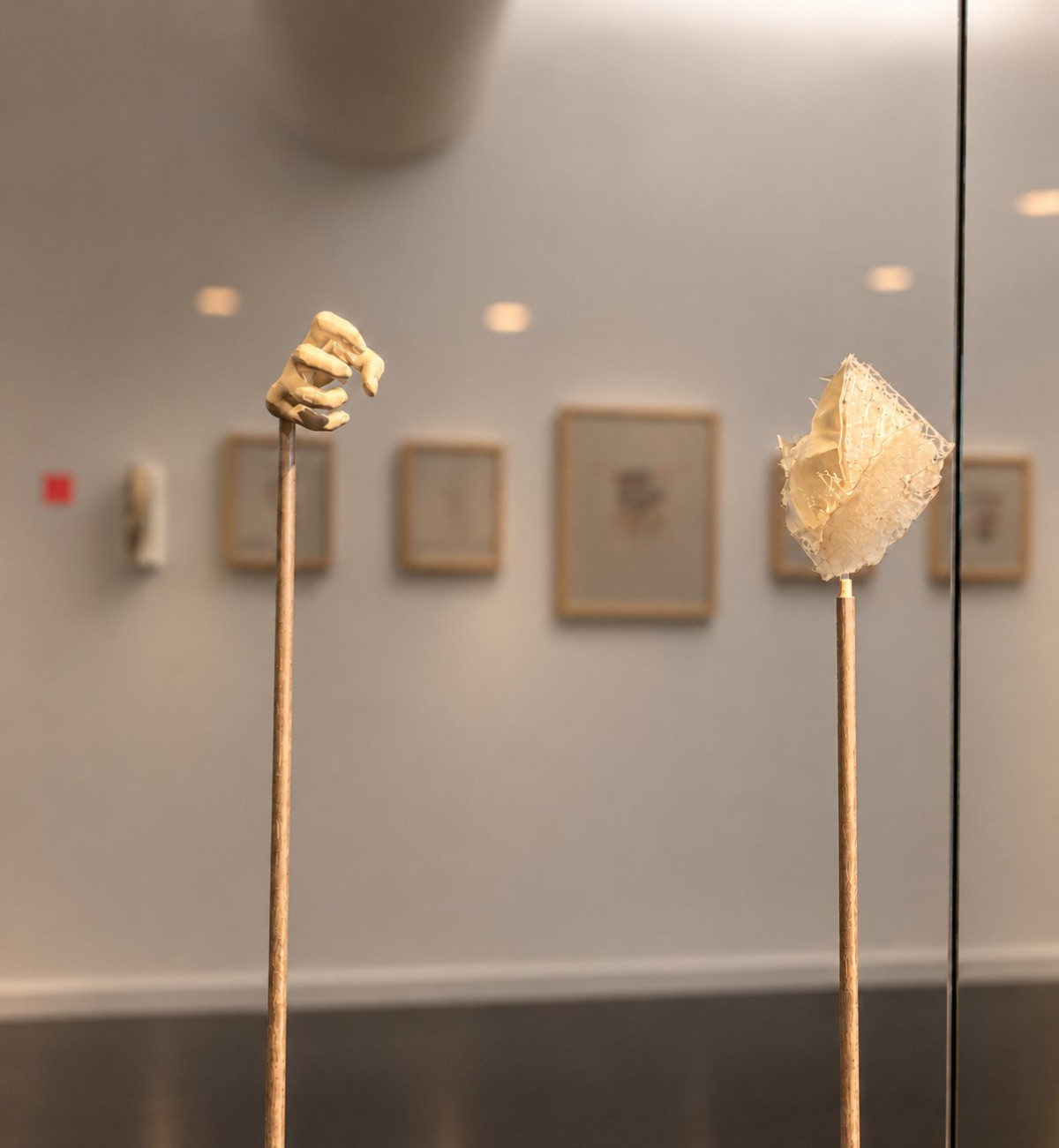
Glitch sculpture of the selfie (2019), installation view with cast hand.
When you’re working on a new piece, what does your creative process usually look like?
It starts with a concept I want to explore, then what I’m really trying to express underneath it. I keep looking for the form that fits. Sometimes the form just surfaces effortlessly, like with In Case of Digitalism. If the piece is better as interactive media art, it takes a lot more iteration. I have to think about interaction, usability, and affordance. In a way, it blurs the line between design and art, and I enjoy that process.
I like to sketch, and I love making physical prototypes. I also keep writing the morning pages from The Artist’s Way, three pages straight every morning without thinking. I’ve found that as long as I write or draw it out, the result is much better than working it out in my head. I guess flattening a tangle of thoughts onto a 2D surface just makes them easier to see.
What’s next for you as an artist?
In Case of Digitalism is currently on view in Roadblocks, which opened November 12 at Studio Montclair in New Jersey. Beyond that, I’ve been thinking about a series exploring our tension with digital life. One idea is a completely enclosed little space built only for playing on your phone. I’d design the most comfortable enclosed environment to help you fully focus on the screen. You’re not allowed to do anything else, and you come out once your time is up.
I’m still really interested in sonification. I think sound-based ideas are especially suited to interactive art, and I might take Opinions through another iteration.
Interview by Avery Monroe